
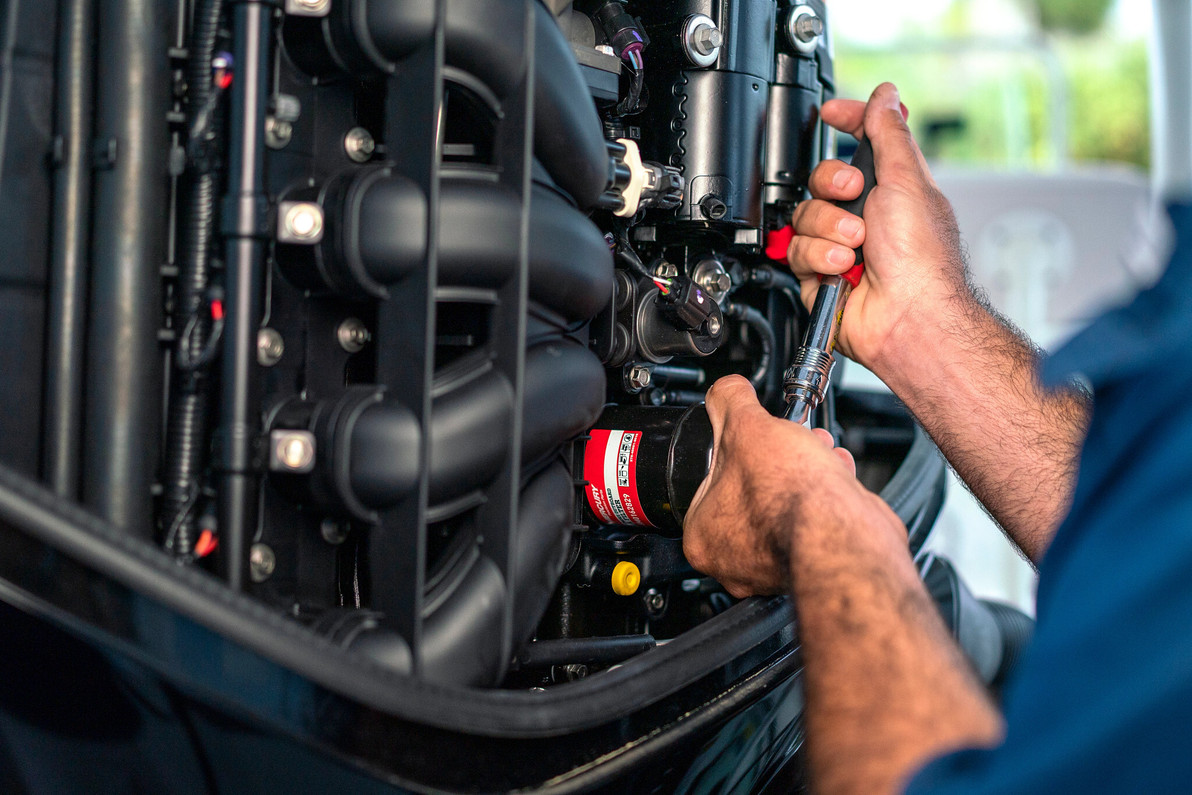
Annual Outboard Service Kit Checklist
An annual outboard service checklist focuses on oil and filters, spark plugs, gear lube, fuel system components, cooling system maintenance, and corrosion prevention. Replacing wear items every season and inspecting key systems prevents breakdowns and costly repairs.
Most outboard problems do not start suddenly. They build slowly from missed maintenance items.
An annual service routine keeps your engine reliable, extends its lifespan, and prevents the kind of failures that leave people stuck at the dock or worse, stranded on the water.
This guide breaks down what should be replaced every season, what should be inspected, and how to build a simple service kit that covers the basics for most outboards.
The Core Annual Items, Oil, Filters, Plugs, Gear Lube
At minimum, annual outboard service includes engine oil, oil filter, spark plugs, and lower unit gear lube.
These items experience regular wear and contamination and should be addressed every season regardless of engine hours.
Engine oil and oil filters should be changed annually or at the manufacturer’s recommended interval. Even low hour engines accumulate moisture and acids over time.
Spark plugs should be inspected every season and replaced if worn, fouled, or corroded. Many owners choose to replace them annually as inexpensive insurance.
Lower unit gear lube should be changed at least once per year. Old gear lube can hide water intrusion and metal wear that leads to expensive damage if ignored.
Fuel System Basics, Primer Bulb, Lines, Clamps, Separator
Fuel system components should be inspected every season and replaced at the first sign of cracking, stiffness, or leaks.
Fuel related issues are one of the most common causes of on water breakdowns.
Primer bulbs should remain flexible and firm up properly when squeezed. If a bulb stays soft or shows cracking, it should be replaced.
Fuel lines and clamps should be checked for brittleness, swelling, or corrosion. Ethanol exposure accelerates deterioration.
Fuel water separator filters should be replaced annually or more often in high humidity or high use environments. Clean fuel protects injectors and carburetors from damage.
Cooling System, Telltale, Thermostat Symptoms, Impeller Timing
The cooling system should be inspected every season and the water pump impeller replaced on a regular schedule, typically every one to three years.
A strong telltale stream indicates water flow but does not guarantee full cooling system health.
Reduced water pressure, overheating alarms, or inconsistent telltale flow can indicate thermostat or impeller issues.
Impellers harden over time even if the engine is not run frequently. Most manufacturers recommend replacement based on time as well as hours.
Ignoring cooling system maintenance is one of the fastest ways to cause serious engine damage.
Corrosion Prevention, Anodes and Grease Points
Anodes and grease points should be inspected and serviced every season to prevent corrosion and binding.
Sacrificial anodes protect critical components from corrosion. They should be replaced when significantly worn, not after they are completely gone.
Grease points including steering components, pivot points, and linkages should be cleaned and lubricated annually.
Saltwater and brackish environments accelerate corrosion, making this step especially important.
Spring Commissioning Checklist and Fall Winterization Checklist
Spring commissioning prepares the engine for use, while fall winterization protects it during storage.
Spring commissioning typically includes oil and filter changes, spark plug inspection, fuel system checks, and cooling system verification.
Fall winterization focuses on stabilizing fuel, fogging internal components if required, draining water, and protecting against freezing.
Performing both steps consistently reduces seasonal failures and long term wear.
Build Your Kit by Engine Family
A basic service kit can be built around engine family and horsepower, covering core wear items and common maintenance parts.
Most outboard service kits include oil, oil filter, spark plugs, gear lube, drain plug gaskets, fuel filters, and water pump components.
Engine families differ in part numbers and service intervals, so kits should be matched accordingly.
If you maintain multiple brands, keep separate kits organized by engine family. For example, service components for Suzuki outboards differ from other platforms even when maintenance principles are the same.
Frequently Asked Questions
What should I replace every year on an outboard
At minimum, engine oil, oil filter, gear lube, and fuel filters should be replaced annually. Spark plugs are often replaced yearly as well.
What maintenance parts should I keep on the boat
Common spares include spark plugs, a fuel filter, primer bulb, drain plug gaskets, and basic tools. These items can prevent a minor issue from ending a trip.
Do I need a fuel water separator on my setup
Most setups benefit from a fuel water separator, especially in humid environments or when using ethanol blended fuel. It helps protect the engine from contamination.
Why This Matters
Consistent annual maintenance prevents the most common causes of outboard failure and keeps small issues from becoming expensive repairs.
People often ask where to buy service parts because they want a list they can trust.
Following a simple annual checklist and building a basic service kit removes uncertainty and keeps your engine reliable season after season.
Helpful Resources
Shop common outboard service and maintenance parts
Build a complete annual service kit
Contact our team for service part recommendations
Gregor’s Marine helps you stay on the water instead of stuck at the dock.
Recent Posts
-
Parts Diagram Does Not Match My Mercury Outboard
If a Mercury parts diagram does not match what is physically on your engine, it usually means the se …Jan 31st 2026 -
Mercury Outboard Parts Lookup by Serial Number
The most accurate way to find the correct parts for a Mercury outboard is by using the engine’s seri …Jan 31st 2026 -
Marine Gear Lube Basics | SAE 90 vs 80W 90 for Lower Units
SAE 90 vs 80W 90 Marine Gear Lube SAE 90 and 80W 90 marine gear lubes can have similar viscosity at …Jan 31st 2026